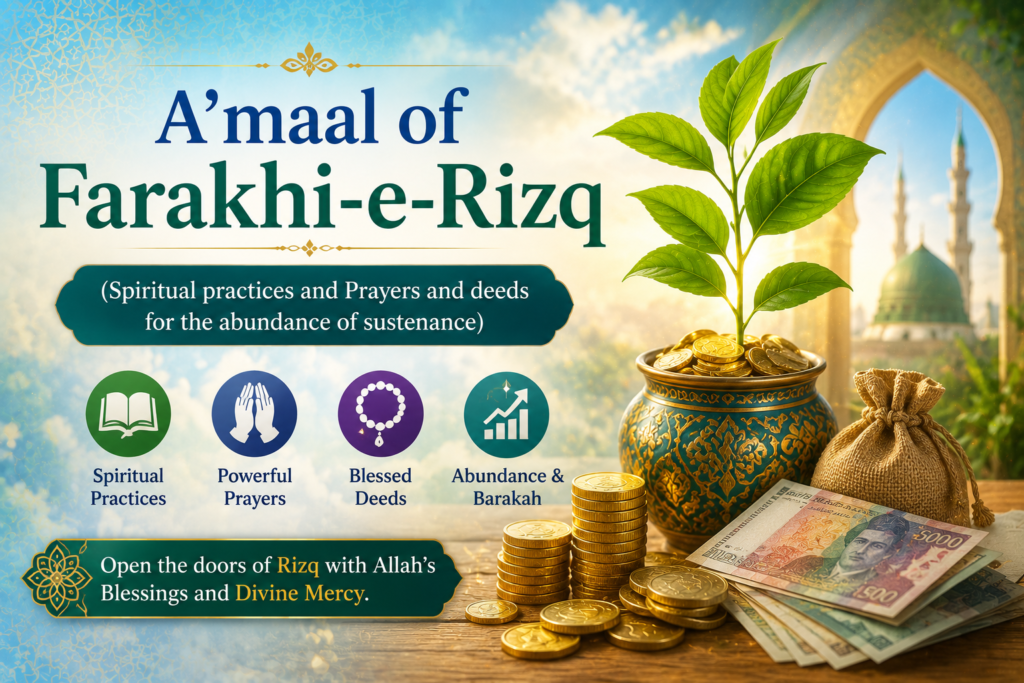
In the Arabic language, where the word Rizq conveys the meaning of daily bread and sustenance, it is also used to denote all forms of divine bounties. Accordingly, within the Holy Quran, it has been utilized for wealth and assets, for the provisions of life, and has also been used for guidance and spiritual gnosis (Hidayat-o-Ma'rifat). Briefly, we can state that the word Rizq is used for every single bounty bestowed upon the servants by Allah Almighty. Allah Almighty has commanded mankind in general, and Muslims in particular, to distinguish between Rizq-e-Halal (lawful sustenance) and Rizq-e-Haram (unlawful sustenance); earning a Halal livelihood and abstaining from Haram is just as essential as practicing Namaz, Roza (fasting), and other foundational obligations (Faraiz)... Yet, it is astonishing that even within Muslim societies, few people distinguish between Halal and Haram. Indeed,
Read more [...]

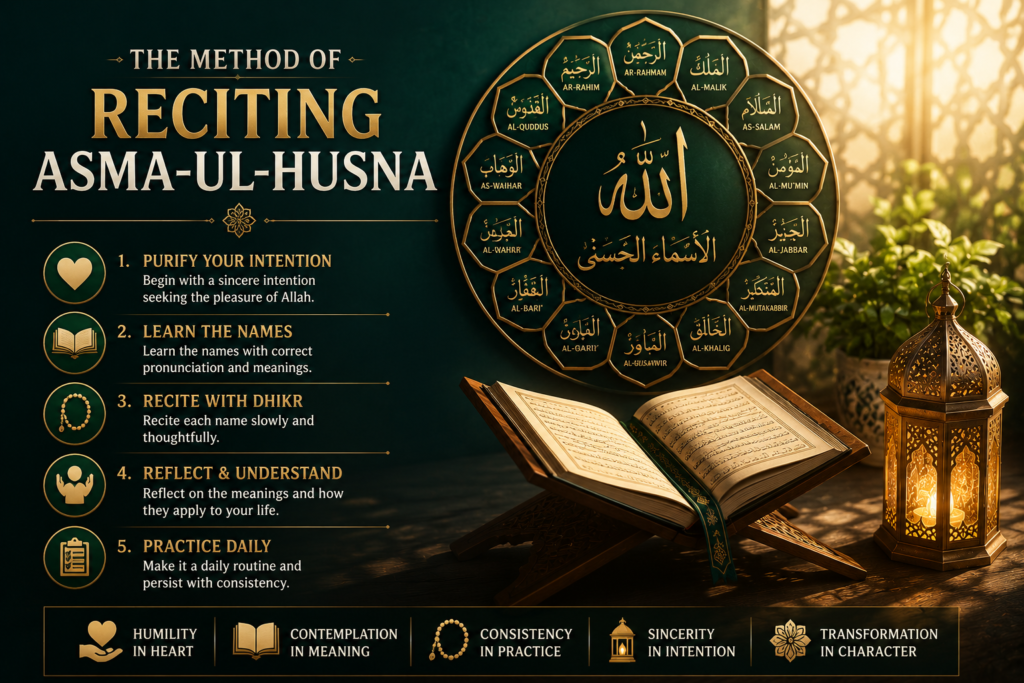 The Method of Reciting All Asma-ul-Husna Together
وَلِلّٰهِ الْأَسْمَاءُ الْحُسْنٰى فَادْعُوهُ بِهَا (Surah Al-A'raf, 7:180) Translation: "And to Allah belong the best names, so invoke Him by them."
Allah Pak states in the Holy Quran: هُوَ اللّٰهُ الَّذِیْ لَاۤ اِلٰهَ اِلَّا هُوَ ۚاَلْمَلِكُ الْقُدُّوْسُ السَّلٰمُ اَلْمُؤمِنُ الْمُهَیْمِنُ الْعَزِ یْزُ الْجَبَّارُ الْمُتَكَبِّرُ ؕسُبْحٰنَ اللّٰهِ عَمَّا یُشْرِكُوْنَ۔ (Surah Al-Hashr, 59:23) Translation (Kanz-ul-Iman): "He is Allah, besides Whom there is no other god; the King, the Most Pure, the Giver of Peace, the Bestower of Security, the Guardian, the All-Mighty, the All-Compelling, the Supreme; Glory be to Allah from what they Read more [...]
The Method of Reciting All Asma-ul-Husna Together
وَلِلّٰهِ الْأَسْمَاءُ الْحُسْنٰى فَادْعُوهُ بِهَا (Surah Al-A'raf, 7:180) Translation: "And to Allah belong the best names, so invoke Him by them."
Allah Pak states in the Holy Quran: هُوَ اللّٰهُ الَّذِیْ لَاۤ اِلٰهَ اِلَّا هُوَ ۚاَلْمَلِكُ الْقُدُّوْسُ السَّلٰمُ اَلْمُؤمِنُ الْمُهَیْمِنُ الْعَزِ یْزُ الْجَبَّارُ الْمُتَكَبِّرُ ؕسُبْحٰنَ اللّٰهِ عَمَّا یُشْرِكُوْنَ۔ (Surah Al-Hashr, 59:23) Translation (Kanz-ul-Iman): "He is Allah, besides Whom there is no other god; the King, the Most Pure, the Giver of Peace, the Bestower of Security, the Guardian, the All-Mighty, the All-Compelling, the Supreme; Glory be to Allah from what they Read more [...] 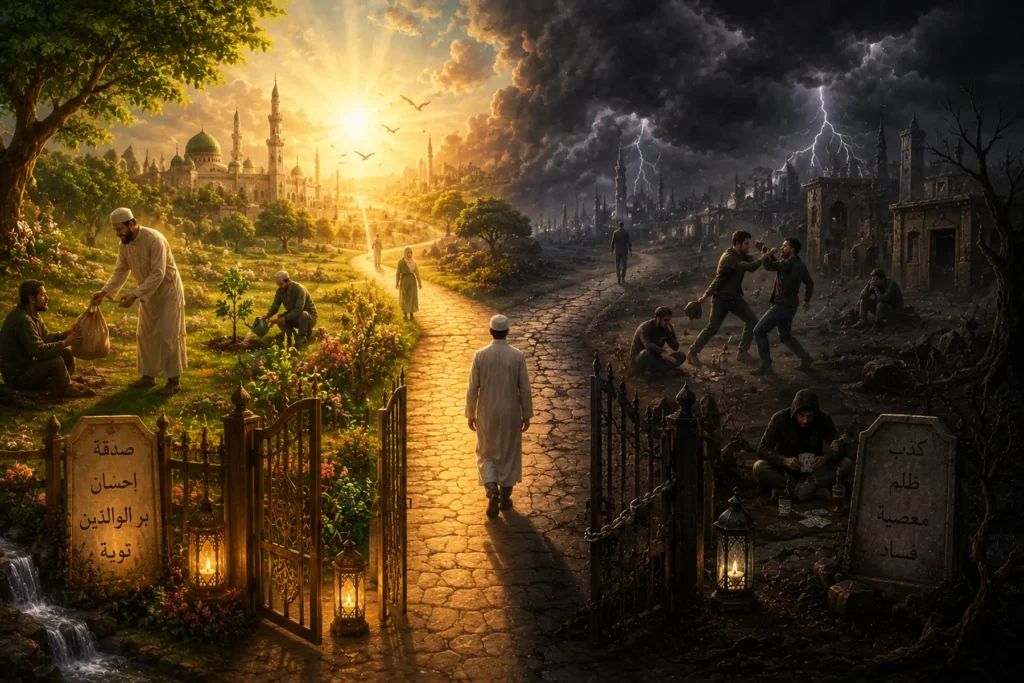 Amaliyaat has a deep and specific affinity with Dua (supplication) and Munajat (whispered prayers). The purpose of reciting Ayat, performing the Wird of Asma-e-Ilahi (Divine Names), or writing them and creating their Naqsh is to benefit from their blessings (Barakat) and spiritual grace (Faiz), just as we draw benefit from Faiz in Dua or Munajat.
Allah Ta'ala has declared: "ما خلقت ھذا باطل" ("You have not created all this in vain").
From this, it is absolutely clear that Allah has embedded both Faida (benefit) and Nuqsan (harm) within everything. However, whether a thing delivers benefit or harm depends entirely upon the Will of Allah. Whichever task Allah wishes to extract from a thing, it functions exactly in that manner. The actions of Zahr (poison) and Taryaq (antidote) operate strictly according to the Will and Masheeat (Divine Intent) of Allah. The function of Zahr is
Amaliyaat has a deep and specific affinity with Dua (supplication) and Munajat (whispered prayers). The purpose of reciting Ayat, performing the Wird of Asma-e-Ilahi (Divine Names), or writing them and creating their Naqsh is to benefit from their blessings (Barakat) and spiritual grace (Faiz), just as we draw benefit from Faiz in Dua or Munajat.
Allah Ta'ala has declared: "ما خلقت ھذا باطل" ("You have not created all this in vain").
From this, it is absolutely clear that Allah has embedded both Faida (benefit) and Nuqsan (harm) within everything. However, whether a thing delivers benefit or harm depends entirely upon the Will of Allah. Whichever task Allah wishes to extract from a thing, it functions exactly in that manner. The actions of Zahr (poison) and Taryaq (antidote) operate strictly according to the Will and Masheeat (Divine Intent) of Allah. The function of Zahr is  Allah Tabarak-wa-Ta'ala declares:
الَّذِیْنَ اِذَاۤ اَصَابَتْهُمْ مُّصِیْبَةٌۙ-قَالُوْۤا اِنَّا لِلّٰهِ وَ اِنَّاۤ اِلَیْهِ رٰجِعُوْنَ
(Surah Al-Baqarah: 156)
Translation: Those who, when a misfortune befalls them, say: "Indeed, we belong to Allah and indeed to Him we are returning."
The etiquette and methods for reciting this Ayat-e-Mubaraka have been established by the Sufiya-e-Kiram and Auliya-e-Izam, from which millions of human beings have benefited. If you are afflicted by any distress or calamity, bring the method detailed below into practice, placing full reliance upon Allah with complete sincerity of heart and intention. Insha-Allah Ta'ala, the problem will be resolved.
Observe a Roza (fast) on a Thursday during Urooj-e-Mah (the waxing phase of the moon). The period up to the 13th night
Allah Tabarak-wa-Ta'ala declares:
الَّذِیْنَ اِذَاۤ اَصَابَتْهُمْ مُّصِیْبَةٌۙ-قَالُوْۤا اِنَّا لِلّٰهِ وَ اِنَّاۤ اِلَیْهِ رٰجِعُوْنَ
(Surah Al-Baqarah: 156)
Translation: Those who, when a misfortune befalls them, say: "Indeed, we belong to Allah and indeed to Him we are returning."
The etiquette and methods for reciting this Ayat-e-Mubaraka have been established by the Sufiya-e-Kiram and Auliya-e-Izam, from which millions of human beings have benefited. If you are afflicted by any distress or calamity, bring the method detailed below into practice, placing full reliance upon Allah with complete sincerity of heart and intention. Insha-Allah Ta'ala, the problem will be resolved.
Observe a Roza (fast) on a Thursday during Urooj-e-Mah (the waxing phase of the moon). The period up to the 13th night