

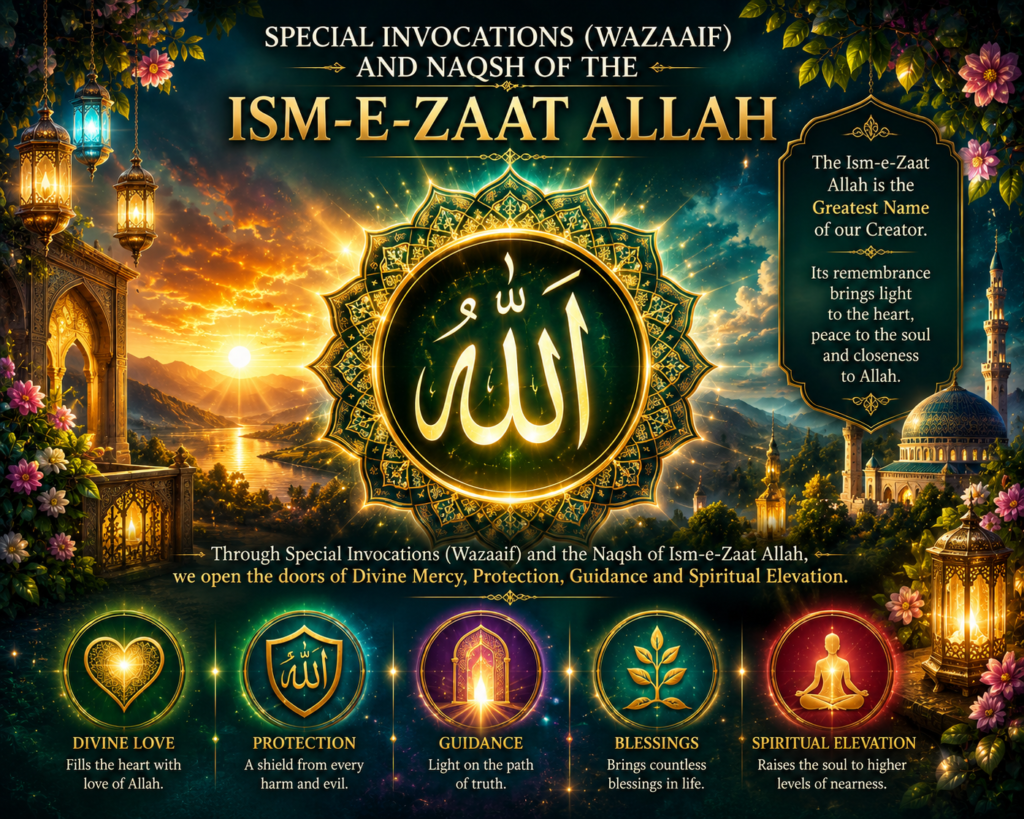
 The esoteric, inward human being existing within the material frame is a living, breathing entity that intensely demands human attention. Just as proper nourishment is vital for the health and sustenance of the physical body, the inward presence also possesses its own unique spiritual nourishment—through which it experiences profound tranquility, becomes healthy and robust, and derives metaphysical strength. Allah Ta'ala explicitly states in the Holy Quran: أَلَا بِذِكْرِ اللَّهِ تَطْمَئِنُّ الْقُلُوبُ (Surah Ar-Ra'd, 13:28) Translation: "Behold, in the remembrance of Allah do hearts find satisfaction and tranquility."
This establishes that the remembrance (Zikr) of the Name of Allah is what brings solace to the human heart and soul, serving as its primary sustenance and source of power. The individual who turns away from this remembrance deprives Read more [...]
The esoteric, inward human being existing within the material frame is a living, breathing entity that intensely demands human attention. Just as proper nourishment is vital for the health and sustenance of the physical body, the inward presence also possesses its own unique spiritual nourishment—through which it experiences profound tranquility, becomes healthy and robust, and derives metaphysical strength. Allah Ta'ala explicitly states in the Holy Quran: أَلَا بِذِكْرِ اللَّهِ تَطْمَئِنُّ الْقُلُوبُ (Surah Ar-Ra'd, 13:28) Translation: "Behold, in the remembrance of Allah do hearts find satisfaction and tranquility."
This establishes that the remembrance (Zikr) of the Name of Allah is what brings solace to the human heart and soul, serving as its primary sustenance and source of power. The individual who turns away from this remembrance deprives Read more [...] Special Invocations (Wazaaif) and Naqsh of the Ism-e-Zaat Allah
The esoteric, inward human being existing within the material frame is a living, breathing entity that intensely demands human attention. Just as proper nourishment is vital for the health and sustenance of the physical body, the inward presence also possesses its own unique spiritual nourishment—through which it experiences profound tranquility, becomes healthy and robust, and derives metaphysical strength. Allah Ta'ala explicitly states in the Holy Quran: أَلَا بِذِكْرِ اللَّهِ تَطْمَئِنُّ الْقُلُوبُ (Surah Ar-Ra'd, 13:28) Translation: "Behold, in the remembrance of Allah do hearts find satisfaction and tranquility."
This establishes that the remembrance (Zikr) of the Name of Allah is what brings solace to the human heart and soul, serving as its primary sustenance and source of power. The individual who turns away from this remembrance deprives Read more [...] 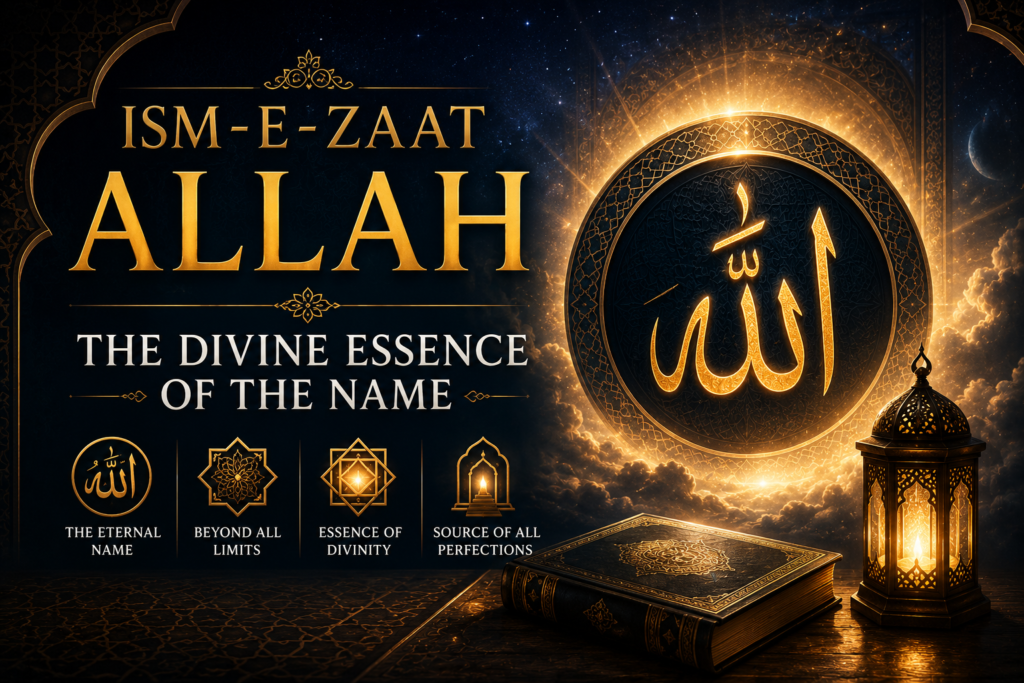 The Ism-e-Zaat Allah (the Personal Name of Allah) is His unique personal name, and it is so profoundly meaningful that even if each of its letters is sequentially removed, it never becomes meaningless. Instead, it continues to manifest the intrinsic attributes of His Absolute Essence (Zaat).
If you omit the first letter (the Alif) of the word "Allah," what remains is "Lillah" (لِلہِ), which translates to "For Allah alone." This signifies that His Absolute Ownership is structurally embedded right within His Personal Name. لِلَّهِ مَا فِي السَّمَاوَاتِ وَالْأَرْضِ (Surah Luqman, 31:26) Translation: "To Allah belongs whatever is in the heavens and the earth."
The proof that He is the ultimate Praised One (Wasif) of everything is also present within this form of the Ism-e-Zaat: يُسَبِّحُ لِلَّهِ مَا فِي السَّمَاوَاتِ
The Ism-e-Zaat Allah (the Personal Name of Allah) is His unique personal name, and it is so profoundly meaningful that even if each of its letters is sequentially removed, it never becomes meaningless. Instead, it continues to manifest the intrinsic attributes of His Absolute Essence (Zaat).
If you omit the first letter (the Alif) of the word "Allah," what remains is "Lillah" (لِلہِ), which translates to "For Allah alone." This signifies that His Absolute Ownership is structurally embedded right within His Personal Name. لِلَّهِ مَا فِي السَّمَاوَاتِ وَالْأَرْضِ (Surah Luqman, 31:26) Translation: "To Allah belongs whatever is in the heavens and the earth."
The proof that He is the ultimate Praised One (Wasif) of everything is also present within this form of the Ism-e-Zaat: يُسَبِّحُ لِلَّهِ مَا فِي السَّمَاوَاتِ 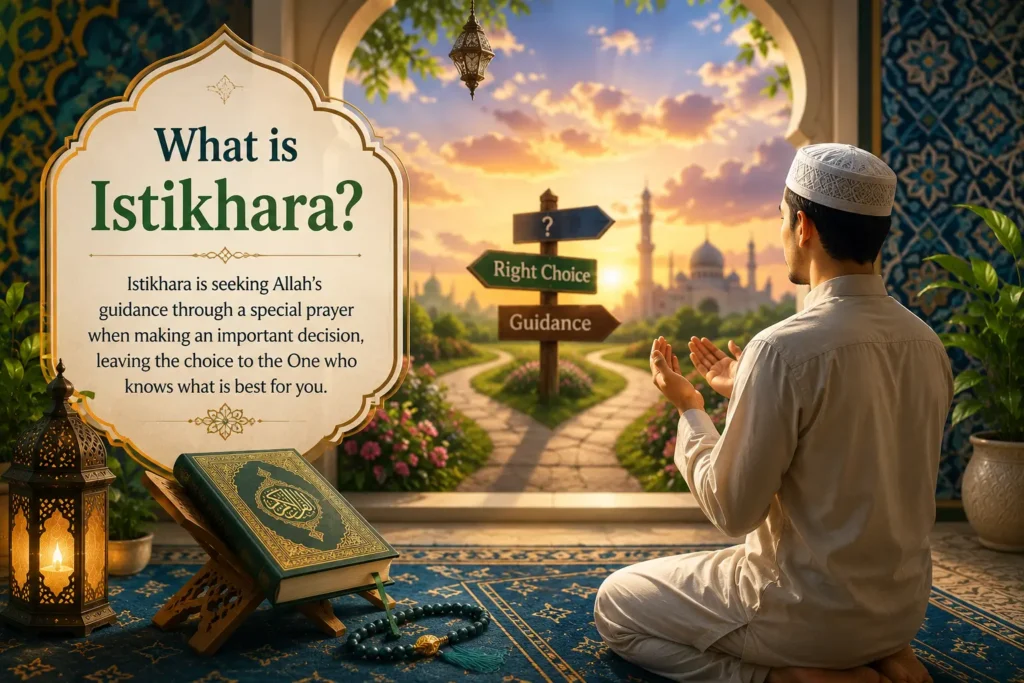 The literal meaning of Istikhaara is: to seek goodness and welfare in a matter. In other words, it means turning toward Allah Ta'ala regarding one's permissible (Jaiz) affairs arising in daily life, and seeking goodness, well-being, and guidance from Allah in that specific task. On the other hand, with respect to its terminological definition, Istikhara means "supplicating for goodness and a better outcome in any matter, or seeking assistance from Allah Ta'ala in choosing between two options, whether to adopt a task or to abandon it."
Performing Istikhara is a Masnoon (Sunnah) act, the method and Dua of which are narrated from the Holy Prophet ﷺ in the Ahadith. The Holy Prophet ﷺ and the noble Companions (Sahaba Kiram رضوان اللہ علیھم اجمعین) used to teach Istikhara with great emphasis before initiating any task. Reflect upon the actual words of the Hadeeth:
Hazrat
The literal meaning of Istikhaara is: to seek goodness and welfare in a matter. In other words, it means turning toward Allah Ta'ala regarding one's permissible (Jaiz) affairs arising in daily life, and seeking goodness, well-being, and guidance from Allah in that specific task. On the other hand, with respect to its terminological definition, Istikhara means "supplicating for goodness and a better outcome in any matter, or seeking assistance from Allah Ta'ala in choosing between two options, whether to adopt a task or to abandon it."
Performing Istikhara is a Masnoon (Sunnah) act, the method and Dua of which are narrated from the Holy Prophet ﷺ in the Ahadith. The Holy Prophet ﷺ and the noble Companions (Sahaba Kiram رضوان اللہ علیھم اجمعین) used to teach Istikhara with great emphasis before initiating any task. Reflect upon the actual words of the Hadeeth:
Hazrat