

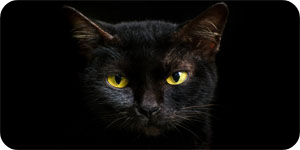
 The practice of taking bad omens (Bad-shuguni) is inherently linked to the illusions of the heart (Tawahhum-e-Qalbi) and signs of spiritual darkness. In reality (Nafs-ul-Amr), it possesses absolutely no truth or validity. In our country, some people are so deeply mired in superstition that if they happen to sneeze while leaving for some work, they sit down, firmly believing that success will no longer be achieved in that task. If a dog shakes its ears along the way, or if someone inquires, “Where are you going?”, they instantly construe it as a proof of failure and turn back immediately. Thousands of such superstitious notions are prevalent, which, after the Hindus, are mostly adhered to by Muslim women. In doing so, apart from displaying a conduct entirely Khilaf-e-Islam (contrary to Islam), they willingly bear the loss of their time and the disruption of their work—alas, a hundred times alas! This must not be done.
The true stature of a Muslim man should be such that he considers himself under the protection and safety of Malik-ul-Mulk Jal-Sha’nuhu at all times. He must perceive the entire universe as completely subjugated and compelled under Allah’s grasp of power (Qabza-e-Qudrat), while simultaneously holding a firm conviction that the greatest entity in the universe cannot cause even an atom’s weight of harm without His Divine Command. A person possessing such perfect faith (Kamil Imaan) requires neither any Ilm-e-Qiyasiyya (conjectural knowledge) nor suffers from any compulsion to observe a Nachhatar (lunar mansion/asterism). Let these superstitions be a cause of congratulation for the polytheists (Mushrikeen); a true Muslim does not care about them in the slightest.
Now, since the discussion has turned toward the science of astronomy and astrology (Ilm-e-Nujoom), a certain clarification is required here.
Ilm-e-Nujoom is of two types: The first is that which strictly discusses the movements and stillness, proximity and distance, rising and setting of celestial bodies (Ajram-e-Alwi). It has absolutely no connection with uncovering matters of the Unseen (Ghaibi Umoor). It is, so to speak, celestial geography. The principles of Islam do not issue any decree (Fatwa) declaring it Haram.
However, the second type of Ilm-e-Nujoom is that in which the movements of the stars are used to deduce and establish independent governance over the events of the world. This is the specific Ilm-e-Nujoom that is strictly Haram according to the Shari’ah.
The employment of this type of Ilm-e-Nujoom is not only impermissible (Na-jaiz) but constitutes Kufr (disbelief). Accordingly, it is stated in the Hadeeth Shareef:
“It is narrated by Ibn Abbas (رضی اللہ عنہ) that the Messenger of Allah ﷺ stated: ‘Whoever learns a branch of Ilm-e-Nujoom, except for that which Allah has described, has indeed learned a branch of Jadu (magic). The astrologer (Nujoomi) is a fortune-teller (Kahin). And the Kahin is a magician (Sahir). And the Sahir is a disbeliever (Kafir).'” (Mishkat, Bab-ul-Kahanat)